Trusted Betel Nut Supplier from Indonesia
Betel Nut
Source export-grade Betel Nut from Indonesia with Mark Trading. We work with farmers and collectors across Indonesia’s main areca-growing regions to supply whole and split betel nut to importers in Asia, the Middle East, Africa and Europe. Every lot is sun-dried, sorted and graded before packing, so you receive a consistent product from one shipment to the next.
Betel Nut — also known as areca nut, supari or pinang — is the seed of the areca palm and is traded mainly for chewing and further processing. As a betel nut supplier and exporter, Mark Trading manages the full process from grading and container stuffing to export documentation, with EXW, FOB and CIF terms available from major Indonesian ports.
Betel Nut Specification
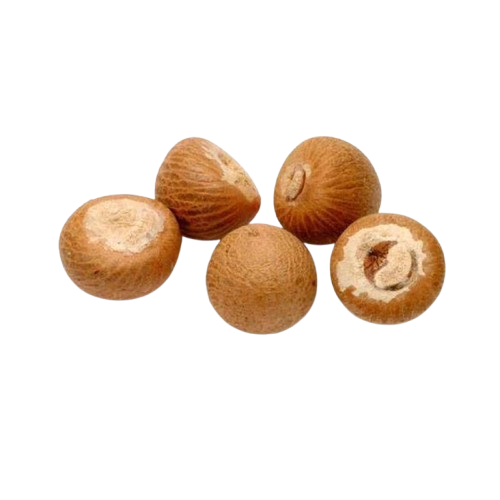
Whole Betel Nut
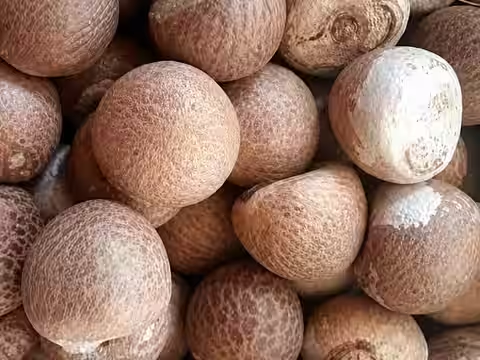
Form : Whole nut (Bulat)
Grade : 60–65, 70–75, 80–85
Origin : Indonesia
Drying : Natural sun-dried
Size : Typical mix of 3–6 cm
CONTENT
Moisture : 5% max
Colour : Uniform, sorted by grade
PURITY
Admixture : 1% max
Sorting : Graded by size and colour before packing
PACKING
60 kg double-layer sack (inner PP woven, outer jute)
MOQ : 1 x 40ft FCL
* Grade, size and packing can be adjusted to your market requirements.
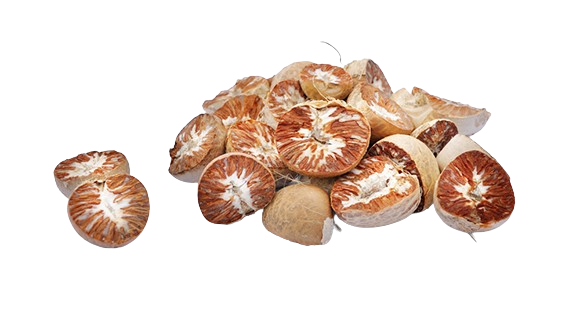
Split Betel Nut
Form : Split nut (Belah)
Grade : 60–65, 70–75, 80–85
Origin : Indonesia
Drying : Natural sun-dried
Cut : 2-piece or 4-piece
CONTENT
Moisture : 5% max
Cut : Clean and even
PURITY
Foreign matter : 0.5% max
Sorting : Graded by size and colour before packing
PACKING
60 kg double-layer sack (inner PP woven, outer jute)
MOQ : 1 x 40ft FCL
* Grade, cut and packing can be adjusted to your market requirements.
Whole and Split Betel Nut Comparison
Whole Betel Nut
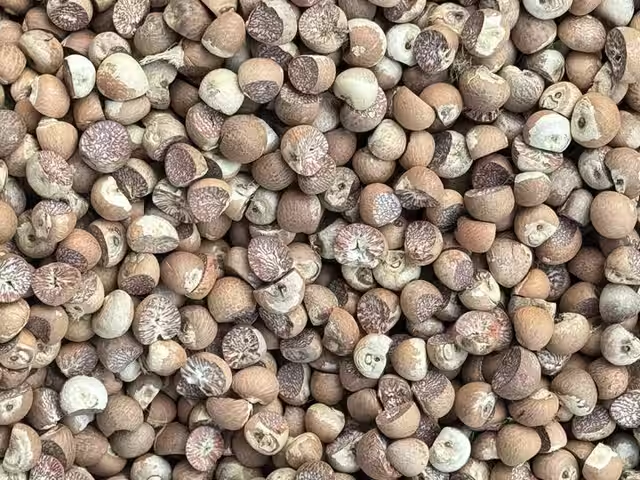
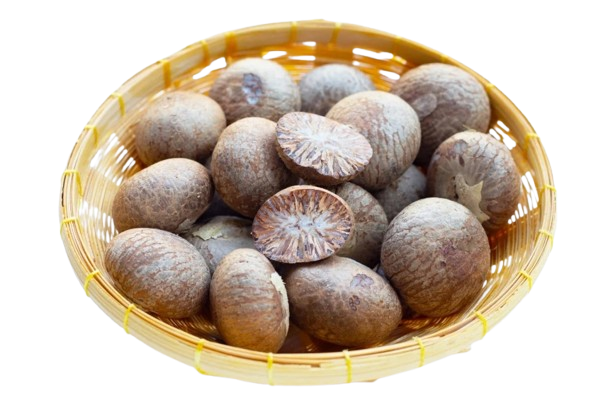
Whole betel nut, known in Indonesia as pinang bulat, is dried in its natural form and then sorted by size and colour. Indonesian whole nuts are valued for their even appearance and firm texture, which makes them a dependable choice for chewing markets and for processors who prefer to cut or slice the nut themselves. Each lot is graded into 60–65, 70–75 or 80–85, and moisture is kept at 5% or below to protect the cargo during long sea transit. A good fit for importers, wholesalers, distributors and processing plants.
Split Betel Nut
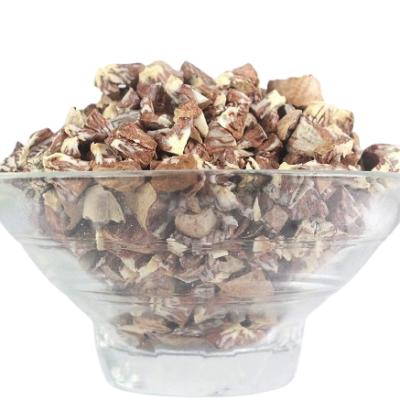
Split betel nut, or pinang belah, is cut cleanly into two or four pieces before drying. Opening the nut helps it dry evenly and shows the marbled interior, so buyers can judge the quality at a glance. Split nut is the preferred form in several Asian and Middle Eastern markets, both for chewing and for further processing. Our split betel nut is dried to a maximum of 5% moisture, foreign matter is held to 0.5% or less, and it is packed in the same double-layer sacks as our whole nut.
Betel Nut Detail
Indonesian Betel Nut
Betel nut is the seed of the areca palm (Areca catechu), a slender tropical palm cultivated widely across South and Southeast Asia. In international trade the same product appears under several names: areca nut, supari in India and Pakistan, and pinang in Indonesia and Malaysia. Whichever name your market uses, Mark Trading can supply it in whole, split and sliced forms.
Betel Nut Introduction
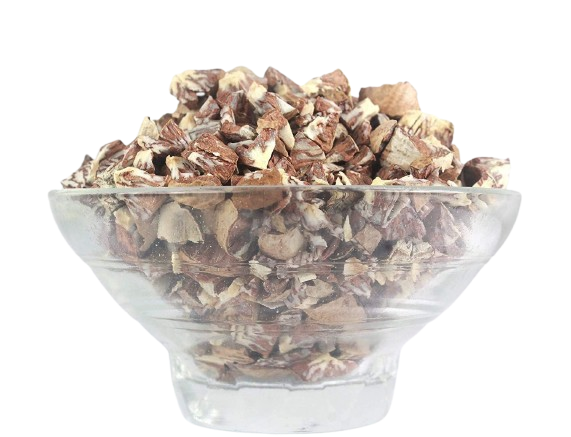
Areca fruits are harvested once they ripen and are then dried, either whole or after splitting, until the moisture drops to a level that is safe for storage and shipping. The dried nuts are separated from the husk and sorted by size, colour and soundness. The finished nut is hard and fibrous, with a brown, marbled interior that buyers use as a quick visual indicator of quality.
Origin
Indonesia is one of the world’s leading producers of betel nut, with much of the crop grown on the island of Sumatra. The warm, humid climate supports a steady harvest through most of the year. Mark Trading sources directly from farmers and collectors in these growing areas, which keeps each lot traceable to its origin and helps us maintain reliable supply for repeat orders.
Processing & Quality Control
Our team on the ground follows every step, from raw material collection through drying, sorting, grading and final packing. Before loading, each lot is checked for moisture, colour, size and impurities against the specification agreed with the buyer. Photos and videos of the actual batch can be shared before shipment, and third-party inspection can be arranged on request.
Packaging & Shipment
Betel nut is packed in 60 kg double-layer sacks, with an inner PP woven bag and an outer jute layer, to protect the cargo at sea. Our standard minimum order is one 40ft FCL. We ship on EXW, FOB or CIF terms from major Indonesian ports and provide the usual export documents, including Commercial Invoice, Packing List, Certificate of Origin and Phytosanitary Certificate.
Uses & Applications
Most betel nut traded internationally is used for chewing, either on its own or in traditional preparations across South Asia, Southeast Asia, the Middle East and parts of Africa. Processors also buy whole and split nut for slicing and further processing, and sliced areca is used in a range of industrial applications.
Looking for a reliable betel nut supplier in Indonesia? Send Mark Trading your destination country, preferred grade and form (whole, split or sliced), monthly quantity and target shipping schedule, and our team will reply with current pricing and availability.